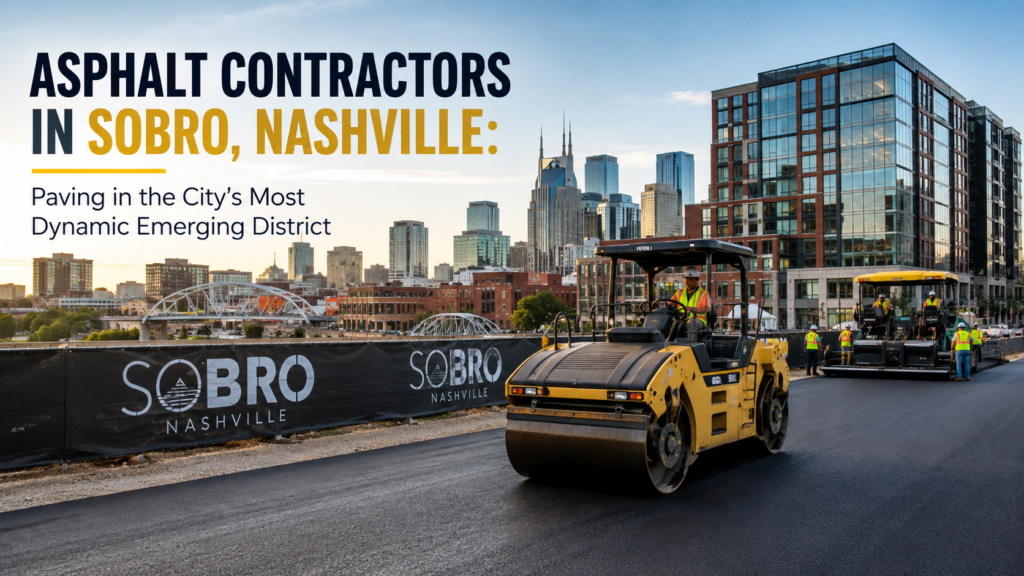
SoBro South Broadway is one of Nashville’s most transformative neighborhoods, situated immediately south of Broadway and the Lower Broadway entertainment corridor. Once characterized by light industrial uses and surface parking lots serving downtown workers, SoBro has emerged as one of Nashville’s most densely developed new districts, with luxury hotels, apartments, music venues, restaurants, and corporate offices rising rapidly on what were once underutilized blocks. This rapid transformation creates some of the most complex and demanding asphalt paving scenarios in the entire Nashville metro area. This guide explains what Asphalt Contractor SoBro provide in SoBro and why this evolving urban neighborhood presents distinctive paving challenges.
SoBro’s Development Context and Paving Demand
SoBro’s development boom driven by Nashville’s status as one of the fastest-growing major metros in the United States has fundamentally changed the built environment of the district within the span of a decade. Surface parking lots that once occupied full city blocks are being replaced by structured parking garages serving new mixed-use towers. The streets themselves particularly Korean Veterans Boulevard (KVB) and adjacent corridors have been upgraded to handle increased pedestrian and vehicle traffic. Remaining surface lots have become intensively used as parking serving both the entertainment district and the growing residential and office population of SoBro itself.
For asphalt contractors, this environment means several things. First, the high intensity of use on surface parking lots in SoBro is among the most demanding in Nashville lots serving Lower Broadway tourists, convention center visitors, stadium event traffic for Nissan Stadium across the river, and the concentrated residential and commercial density of the district experience vehicle turnover and loading that rapidly deteriorates inadequately maintained asphalt. Second, the construction activity throughout SoBro creates the kind of heavy equipment access and delivery truck traffic that can damage existing paved surfaces on adjacent properties.
Nashville’s summer heat is particularly impactful on SoBro’s asphalt. The urban heat island effect the tendency of dense urban environments with significant hardscape to retain more heat than surrounding areas means that surface temperatures in SoBro parking lots and streets exceed those measured at Nashville weather stations. Asphalt already softened by summer heat is further stressed by the urban heat island, making rutting and deformation under concentrated wheel loads more likely.
Asphalt Services Relevant to SoBro Properties
Parking lot maintenance is the primary commercial asphalt service in SoBro. The surface parking lots that remain in the district serving hotels, entertainment venues, and commercial tenants require intensive maintenance programs to keep pace with the wear generated by their heavy use. Annual sealcoating, prompt crack repair and pothole patching, and regular re-striping are the core components of a SoBro commercial parking lot maintenance program.
Line striping is particularly critical in SoBro’s high-density commercial parking environment. Lots serving thousands of vehicles per day require crisp, clearly visible striping to prevent parking conflicts, maintain traffic flow, and meet ADA compliance requirements. SoBro parking lots also typically require fire lane markings clearly designated in red with proper stenciling that must meet Nashville Fire Department requirements. Faded or missing fire lane markings create both safety risks and code violations.
ADA compliance in SoBro’s commercial parking facilities is actively enforced. Nashville’s urban parking facilities serve significant numbers of visitors with disabilities tourists, convention attendees, and entertainment district patrons and parking facilities that fail to meet ADA accessible space requirements face both enforcement action and negative customer experience consequences. Any paving modification in SoBro must address accessible space compliance as part of the project scope.
Concrete work often accompanies asphalt projects in SoBro. Curb and gutter construction or repair, concrete sidewalk installation or modification, concrete pad construction for outdoor seating or equipment areas, and the concrete approach aprons at parking structure or lot entrances are all common ancillary scopes for asphalt contractors working in the dense urban environment of SoBro.
Nashville’s Stormwater Requirements in SoBro
SoBro’s position within the Nashville urban watershed and the dense impervious surface coverage of the district makes stormwater management a significant regulatory consideration for any commercial paving project. Metro Nashville’s stormwater quality requirements and the Tennessee Department of Environment and Conservation’s construction permit program apply to paving projects that meet applicable thresholds.
The Cumberland River which borders SoBro on its eastern side is a regulated waterway, and Metro Nashville’s stormwater program includes requirements for managing the quality and quantity of runoff from the SoBro district. Commercial properties undertaking significant paving modifications should confirm applicable stormwater requirements with Metro Water Services before work begins.
Common Questions About Asphalt Contractors in SoBro Nashville
Can parking lots in SoBro remain operational during sealcoating or resurfacing? Yes, with phase scheduling. Experienced Nashville commercial paving contractors work in phases, maintaining vehicle access to portions of a parking lot while other sections are being treated. Temporary parking management, cones, and clear directional signage keep lot operations functional throughout the project. For properties that absolutely cannot tolerate any parking disruption, night or early-morning work minimizes operational impact.
How does SoBro’s urban heat island effect affect asphalt maintenance schedules? Higher effective surface temperatures in SoBro mean that asphalt deteriorates faster than in suburban Nashville locations. The combination of high traffic volume and elevated surface temperatures argues for more frequent maintenance cycles than suburban properties sealcoating every one to two years for the highest-use SoBro commercial lots is appropriate.
What are the fire lane marking requirements for Nashville parking lots in SoBro? Nashville Fire Department requires that fire lanes be clearly marked in red and appropriately stenciled. The specific marking requirements including minimum lane width, maximum spacing of fire lane markings, and required signage are governed by Nashville’s fire code. Asphalt contractors with commercial Nashville experience are familiar with these requirements and design their fire lane marking to comply.